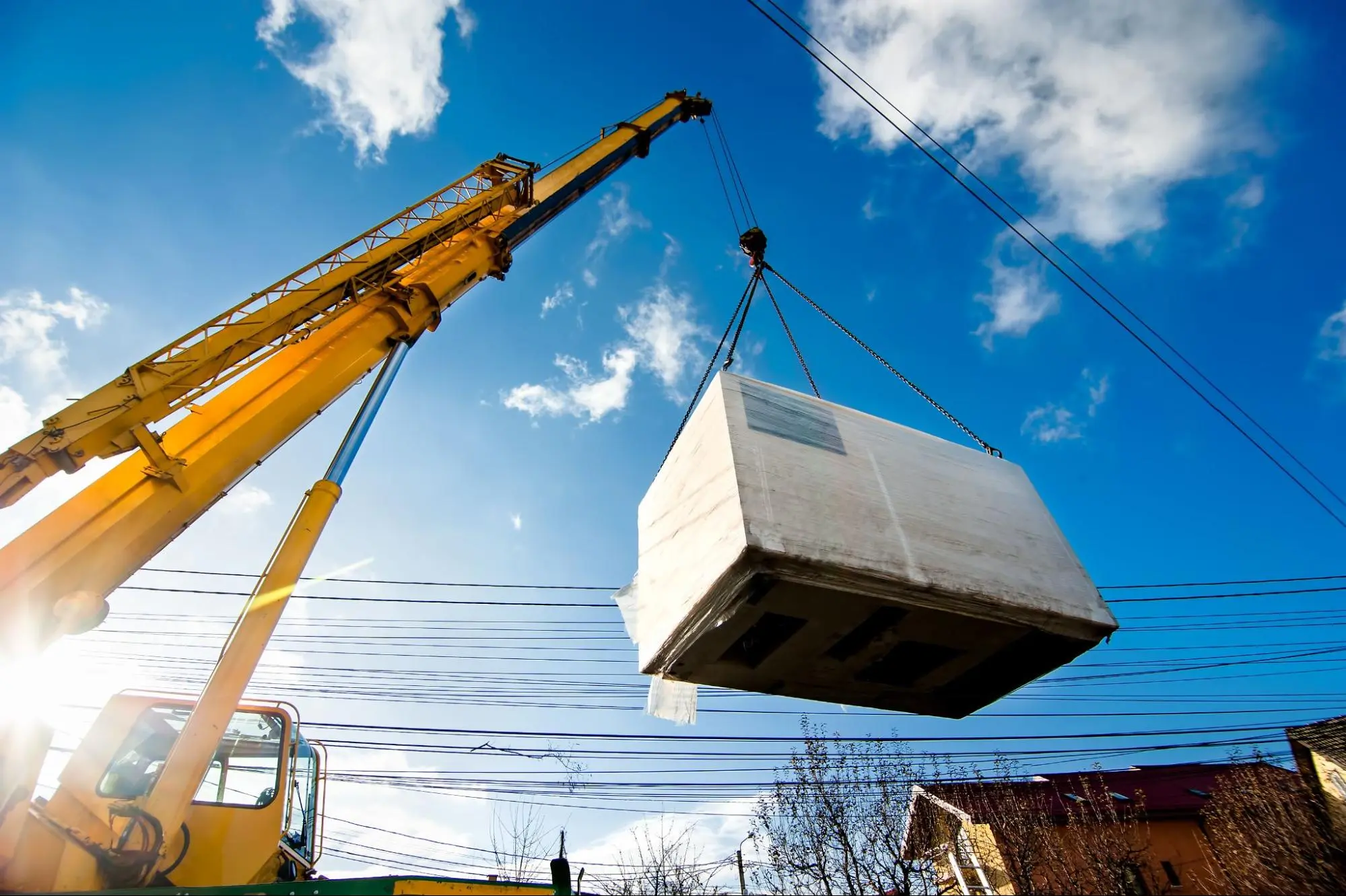
Load lifting is one of the highest-risk activities in industrial environments and large-scale construction projects. Any failure can result in serious accidents, material damage, and prolonged downtime.
In this context, safety depends not only on standards or modern equipment, but mainly on a strong, technical, and experienced partnership capable of acting preventively at every stage of the operation.
Several factors make lifting a critical activity, such as heavy loads, suspended movements, restricted or complex environments, surrounding interferences, and the need for precise planning.
Why load lifting is a high-risk operation
These elements require assertive technical decisions that are only possible with the support of a specialized partner.
When lifting operations are carried out without a strong partnership, recurring risks arise, such as inadequate planning, incorrect crane selection, lack of center-of-gravity analysis, communication failures, and a significant increase in accident risk.
These issues reinforce that safety is not improvisation, but the result of planning and partnership.
Main risks when there is no proper partnership
A strong partnership begins even before the crane arrives on site, with detailed technical planning and evaluation of all factors that impact operational safety.
Choosing the right equipment ensures compatibility between the load, working radius, and environmental conditions, preventing unnecessary risks.
Clear procedures, efficient communication, and a strong focus on risk prevention make operations safer and more predictable.
How a strategic partnership increases lifting safety
During execution, continuous technical support allows quick responses to unexpected situations, reducing failures and interruptions.
CSI Brasil is recognized for operating with a strong focus on safety, planning, and operational efficiency.
Its strengths include solid technical expertise in load lifting, a consultative approach from the planning stage, modern and well-maintained equipment, and a strong commitment to standards and best practices.
With experience in highly complex operations, the company positions itself as a strategic partner, reducing risks and raising the safety standards of every project.
CSI Brasil’s advantage in safe lifting operations
Safe operations tend to be more productive. When lifting is properly planned and executed, there are fewer interruptions, schedules are met, costs remain under control, and teams work with greater confidence.
Safety and productivity go hand in hand, and both depend directly on the chosen partner.
Before hiring, evaluate whether the partner provides technical planning, proven experience, a prevention-focused approach, operational support, and a strong commitment to best practices.
Load lifting safety is not the result of chance. It comes from strategic decisions, technical planning, and, above all, choosing a strong and reliable partner.
The relationship between partnership, safety, and productivity
Companies that prioritize safety understand that the right partner makes all the difference. In this scenario, CSI Brasil stands out as a national reference, offering not only cranes, but also trust, expertise, and safety in every operation.
1. Why does partnership directly influence safety?
How to choose a partner focused on lifting safety
2. Does the crane alone guarantee safety?
Safety starts with the right partnership
3. Does the partner participate in lift planning?
4. Does CSI Brasil operate in complex projects?
FAQ – Safety and partnership in load lifting
Because it involves planning, proper equipment selection, and technical support.
No. Safety depends on technical analysis, proper procedures, and operational experience.
Yes. A strong partnership begins before execution with detailed technical planning.
Yes. The company has proven expertise in highly complex lifting operations.